
Richmond Criminal History Checks
Start with the record holder that can answer the question. The Richmond Police Records Section handles city police reports, traffic reports, clearance letters, Live Scan appointments, and related releases. A report describes the event handled by Richmond officers. It does not show the full course of a criminal prosecution. For that, use the Superior Court record after the District Attorney files charges.
A Richmond criminal record search works best in this order:
- Call Richmond Police Records at (510) 620-6675 to confirm that a report is ready and may be released.
- Request the Richmond police or traffic report, or use the city public-records channel when the request is broader.
- Check current county custody if the event involved a recent arrest and booking.
- Search the Contra Costa Superior Court portal for filed charges, hearings, and the final disposition.
- For a complete review of your own California record, request a fingerprint-based record review from California DOJ.
Each result has a limited scope. The Richmond file reflects city police work, the jail record reflects custody, and the court file reflects prosecution. California DOJ record review is subject-only and cannot be used as a public name search on another person.
Richmond Police Record Fees
Richmond publishes specific services and charges through its Records Section. Police and traffic report copies cost $10 each. A clearance letter costs $40, while a vehicle release costs $240. Live Scan costs $50 plus any DOJ or FBI fee. Property-release charges vary, and a non-residential ticket sign-off costs $10. Calling first saves a trip because release depends on report status and the requester's right of access.
| Richmond service | Published charge | Key condition |
|---|---|---|
| Police report copy | $10 per report | Confirm that it is ready and eligible |
| Traffic report copy | $10 | Release rules still apply |
| Clearance letter | $40 | Records Section service |
| Live Scan | $50 plus DOJ/FBI fees | Appointment, form, and valid photo ID |
| Vehicle release | $240 | Records Section service |
The official Richmond Police Department overview also connects residents with city police resources. The image below preserves that city source in context.
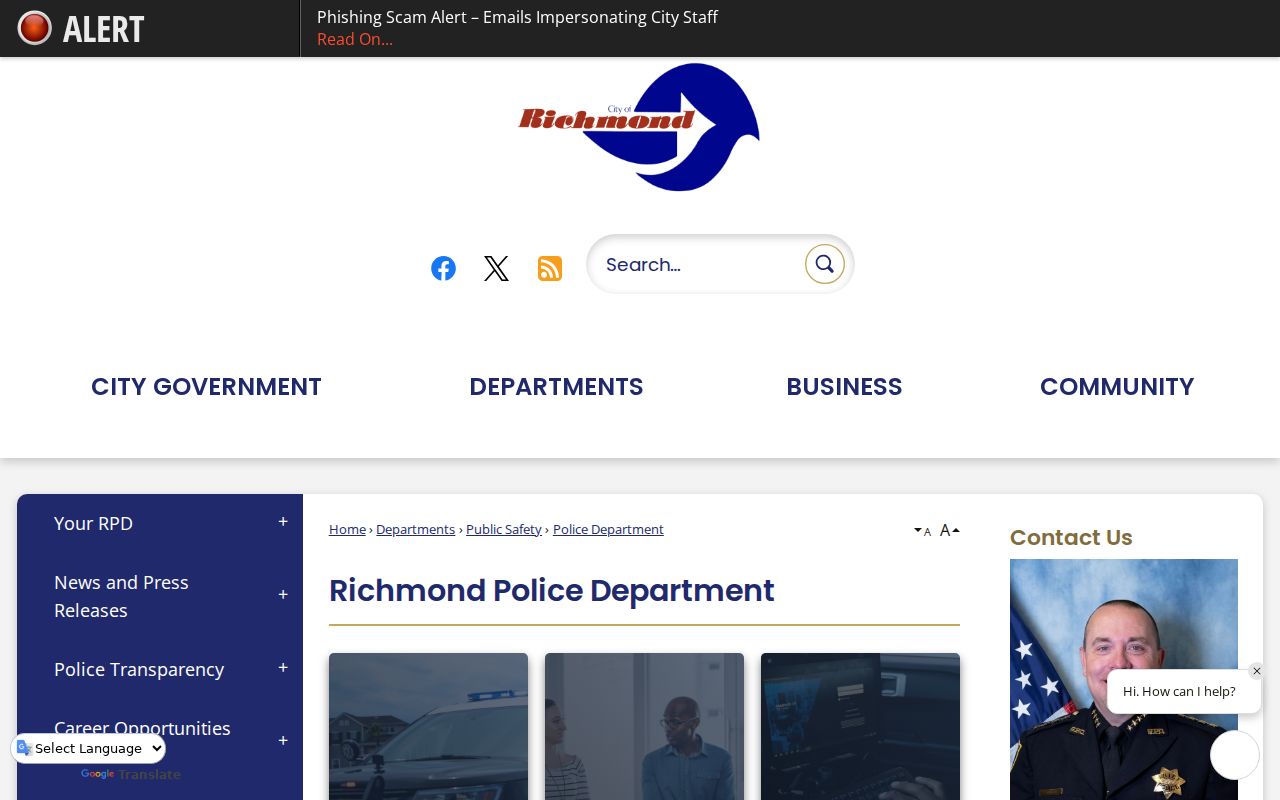
The department page is the broad entry point, while Records is the more precise stop for copies, clearance letters, and release questions.
Records at the Richmond Police Department
Richmond Police keeps records created by its own officers. Those files can include incident and offense reports, traffic collision reports, and documents tied to services listed by the Records Section. Reports are usually available seven to ten business days after the incident. That time is an estimate, not a promise that every file will be released. Staff may withhold a file while the case remains under active investigation, when release may put an involved person at risk, or when confidential juvenile material appears in it.
Valid photo identification may be required for a report release or Live Scan service. Richmond lists a California driver's license, state identification, military identification, and green card as examples for Live Scan. The applicant must also bring the request form supplied by the requesting agency. Richmond schedules this fingerprint service on Tuesdays, Wednesdays, and Thursdays through the Records Public Line.
The Richmond Police Records page shows the local service counter and its rules.
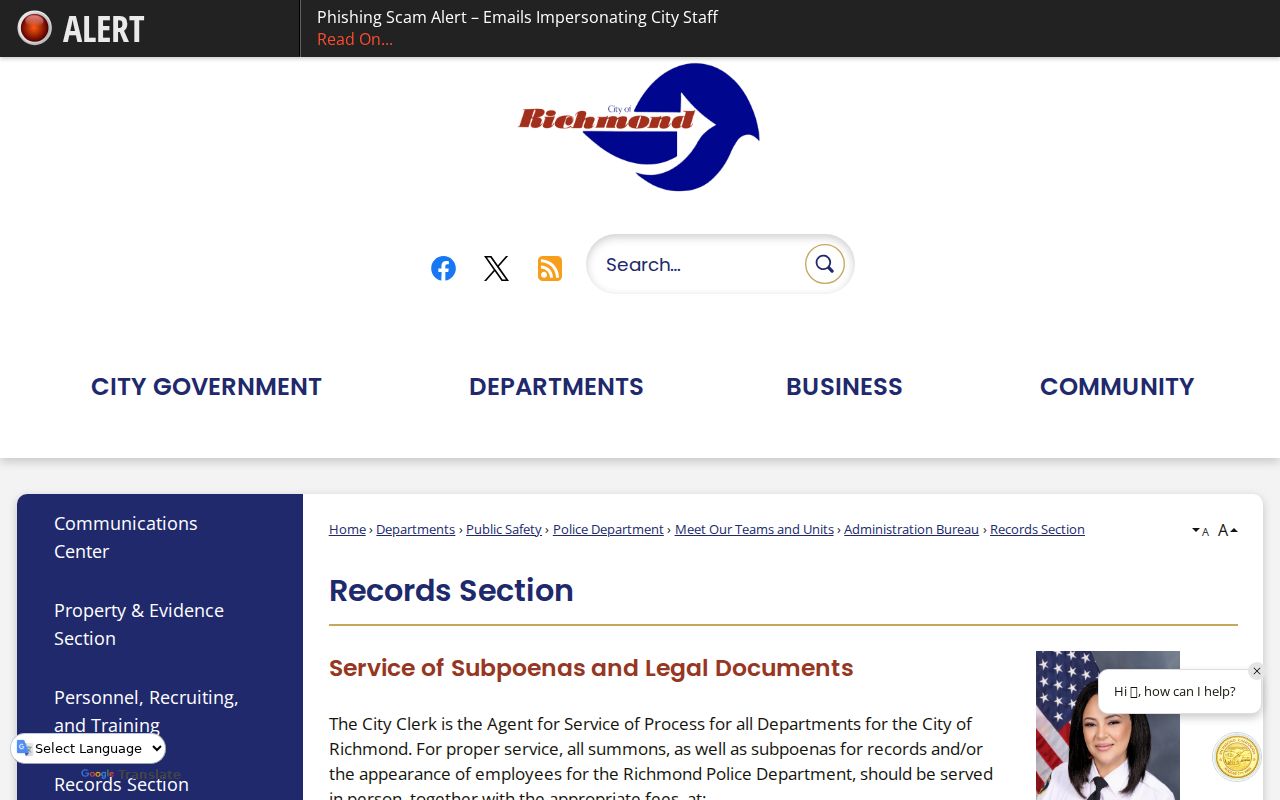
That distinction matters: a city report request seeks a Richmond-created file, while fingerprinting transmits identity data for an authorized check or personal record review.
Richmond Online Police Reports
Richmond's online police reporting system accepts a narrow group of non-emergency events. Eligible incidents must occur within Richmond, have no known suspect, and not take place on a state freeway. The listed types include property damage or vandalism, lost property, annoying phone calls, theft other than a stolen vehicle, and hit-and-run incidents. An emergency or an event with suspect information belongs with dispatch, not the online form.
The online filing produces a temporary report number. Police review the submission before approving it. Once approved, the filer receives a final case number and a PDF copy. If Richmond sends no response within seven days, the city directs the filer to contact Records and provide the temporary number. Filing a report creates a police record; it is not a search of arrests or other people's histories.
The city's online police report instructions show the scope and follow-up route.
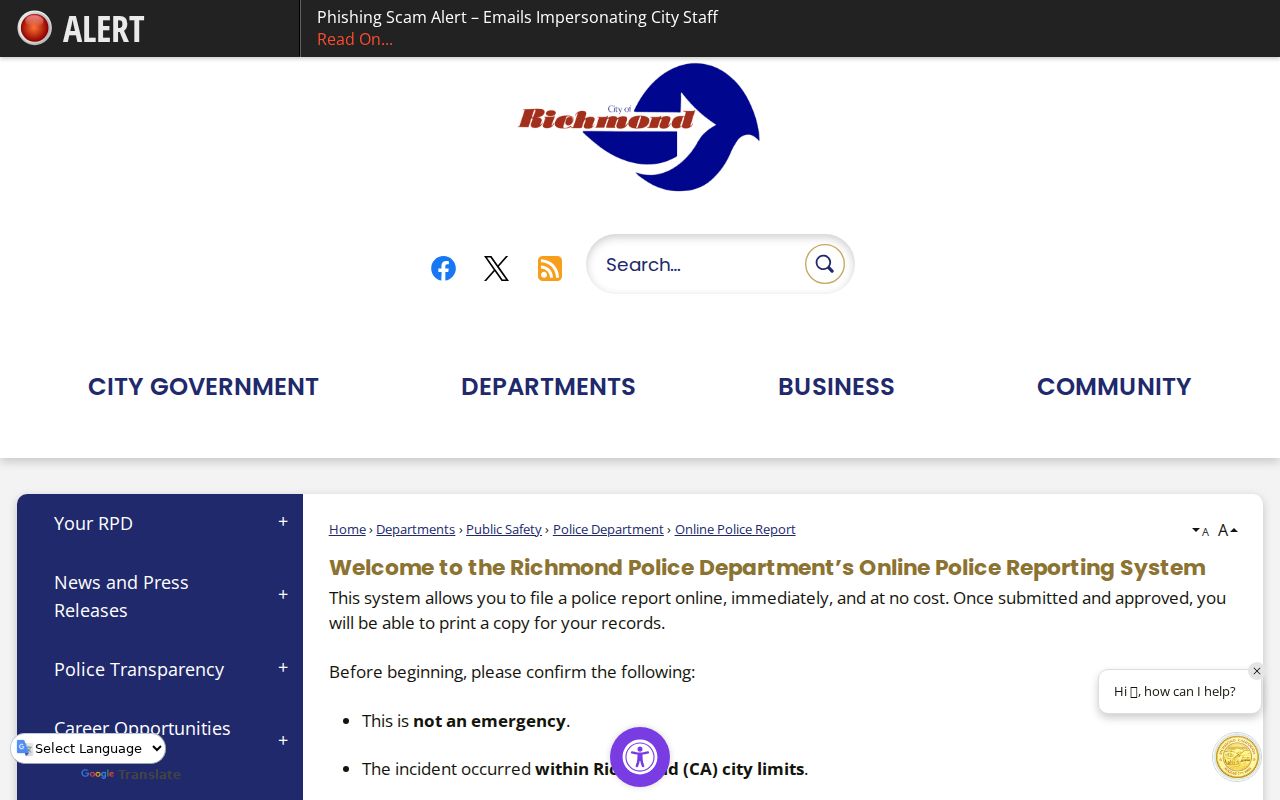
The temporary number is the key link between the first web submission and any later call to Richmond Records.
Booking and Arrest Records in Richmond
Richmond Police creates the arrest report when its officers make an arrest. County custody systems take over if the person is booked into the Contra Costa jail system. A current booking may appear before prosecutors file a complaint, so a same-day Richmond arrest search can produce a custody result while the court portal still shows no case. Search the Sheriff's In-Custody Locator by both first and last name or by booking number.
The jail result is not the Richmond incident report. It focuses on booking number, custody status, charges as known to the Sheriff, housing, bail if shown, and court timing. West County Detention Facility is part of the county custody system serving the west side, but Martinez Detention Facility is the county's primary intake point. A person may move as classification, court, or release decisions occur.
For deeper county booking instructions, use the contextual Contra Costa County arrest search. Then return to Richmond Records for the local police narrative and to the court for the filed case.
Richmond Public Records Requests
Richmond uses NextRequest for city public-records requests. This channel is useful when the desired material is a city record beyond a routine report-copy service, such as a policy, log, dataset, or other record held by a city office. A California Public Records Act request should identify the records with enough detail for staff to locate them. It does not require the city to create a new report or answer broad research questions.
Police material can still be redacted or withheld under an applicable exemption. Active investigative facts, juvenile information, safety-sensitive material, and protected personal details may be limited. The city portal routes the request, while the Richmond Police Records Section remains the direct source for standard police-report services and eligibility checks.
Richmond explains this route on its public records request page.
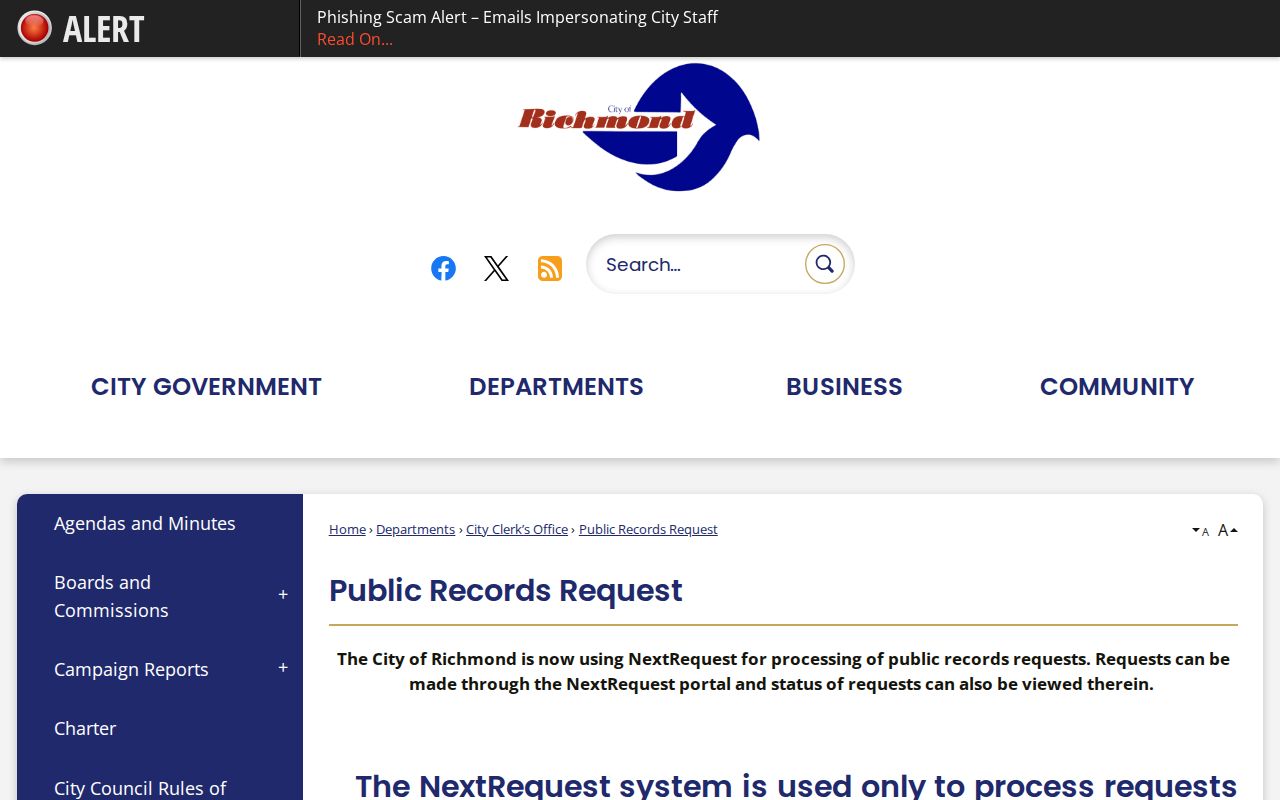
The portal broadens city access, but it does not replace the county court portal or turn restricted police records into public files.
The Richmond Municipal Court File
Richmond has no separate municipal criminal court portal. California places city arrests and local criminal prosecutions in the Superior Court of California, County of Contra Costa. West County criminal clerk services are available at George D. Carroll Courthouse, 100 37th Street in Richmond. This is the local court route for case records after charges are filed, even when Richmond Police made the arrest.
| Court Name | Superior Court of California, County of Contra Costa |
|---|---|
| Richmond Location | George D. Carroll Courthouse, 100 37th Street, Richmond |
| Case Types Heard | State criminal cases, including filed felony and misdemeanor matters assigned to West County |
| Lookup Channel | Contra Costa Superior Court Public Portal, followed by the criminal clerk for copies |
| What the File Shows | Case number, charges, events, hearings, plea, disposition, sentence, and docketed warrant or probation events |
| Online Limit | Criminal minutes, documents, and orders are not available online |
The portal works as an index and status source. A person who needs the complaint, minutes, or an order must contact court records. Richmond police copies and court copies are separate requests because each office holds a different part of the record.
Richmond Juvenile Record Limits
Richmond specifically warns that reports containing confidential juvenile information may not be released. This is more than a routine delay. Juvenile confidentiality can limit what the Police Records Section may disclose even when an adult requester knows the report number or took part in the event. Other protected facts may be redacted while a releasable portion is supplied.
Ask Richmond Records whether a releasable version exists and what identification is required. If a juvenile court record is involved, the Superior Court's restricted-access rules also apply. A public portal search should not be read as proof that no record exists, since confidential matters may not appear in remote public results.
Richmond Live Scan Record Review
Richmond offers Live Scan by appointment on Tuesdays, Wednesdays, and Thursdays. Call Richmond Records at (510) 620-6675 to schedule. Bring valid photo identification and the request form supplied by the agency that requires the fingerprints. Richmond charges a $50 rolling fee, with California DOJ or FBI processing fees added when applicable. The form controls where the fingerprints go and why they are being taken, so it should be complete before the Richmond appointment.
For personal California record review, residents use the DOJ process and form BCIA 8016RR. The applicant marks “Record Review,” submits fingerprints, and receives their own state criminal history to check for accuracy and completeness. Richmond Live Scan captures and sends the prints; Richmond Police does not turn the result into a public local name search. If a disposition is wrong or missing, DOJ directs the person to the court that handled the case so corrected information can be reported.
How Richmond Records Reach the County
A Richmond event can generate three records at three speeds. Richmond Police documents the incident and arrest. The county Sheriff creates a booking file if the person enters custody. The District Attorney decides whether to file charges, and the Superior Court then records hearings and the result. Fingerprints and disposition reports can later connect the event to the California DOJ repository.
Record flow: Richmond Police Department › Contra Costa County Superior Court › California Department of Justice
For a new event, call Richmond Records or check county custody first. For filed charges, use the court portal and George D. Carroll criminal clerk. For an older, complete self-review, California DOJ requires the subject's fingerprints through Live Scan. The DOJ product is not open to a public name search.
Richmond readers who need the wider system can consult the Contra Costa County criminal history overview without treating county and state records as copies of the city file.
Richmond Police Logs and Data
The Richmond Police Department links to a Daily Incident Log, force analysis data, shooting data, its policy manual, and public-records resources. These sources can help a resident understand city activity or locate a date before requesting a specific report. They do not replace a certified court copy or show the outcome of every police contact.
Use a log as a lead, then match the incident number, date, location, and report type with the Records Section. If the incident became a prosecution, shift to the county court case number. This avoids a common error: treating a city activity log as if it were a person's complete Richmond criminal record.
Richmond Record Access Rules
California law separates city public records, court access, and state criminal history. Richmond receives city requests under the California Public Records Act, but exemptions can protect active investigations, juveniles, victims, witnesses, safety details, and other confidential information. Court electronic-access rules permit some remote case information while leaving many criminal documents at the clerk's counter. State summary criminal history is more restricted and is available to an individual for self-review by fingerprint.
Key Statutes:
California Public Records Act generally opens local agency records unless an exemption applies.
Penal Code section 11105 restricts dissemination of California DOJ summary criminal history and permits fingerprint-based self-review.
California court electronic-access rules explain why some case information is remote while other criminal records require courthouse access.
A missing online file may be restricted, not yet filed, held by a different office, or available only as a clerk copy. Match the request to Richmond Police, Contra Costa Superior Court, the Sheriff, or California DOJ before drawing a conclusion.