
Contra Costa County Sex Offender Checks
The California Megan's Law Website is the official public registry channel for Contra Costa County. The California Department of Justice manages it with data supplied by local law enforcement. Searchers do not need a separate county registry or a commercial people-search service. The state system supports name and place-based research while applying California's statutory display rules.
A useful check begins with a clear purpose, such as family safety, neighborhood awareness, or confirming information about a known public profile. Match more than a name. Compare the photograph, physical description, offense details, and displayed location. Address detail may be a full home address, a conditional address, or only a ZIP Code, depending on the legal posting category.
The official Megan's Law registry landing page appears in the source image below.
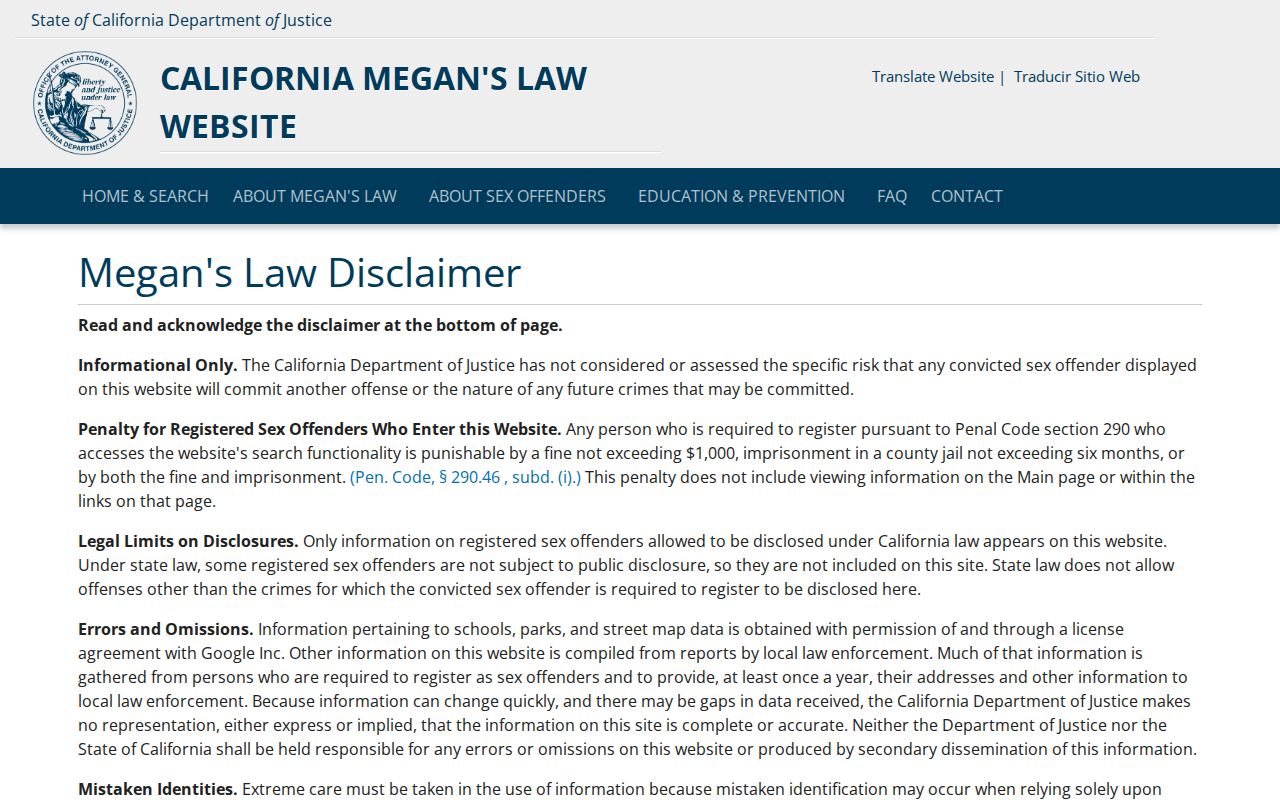
The state source is the right place to begin because it controls both the current public data and the conditions of use.
Contra Costa Registration Updates
Registration takes place with the police department or sheriff jurisdiction where a registrant lives or is transient. California DOJ says a registrant must update residence or transient status with local law enforcement within five working days. The local agency forwards the change to DOJ, and the Megan's Law site is updated daily from information received from those agencies.
This chain explains why the state site, rather than a static county list, is the public search layer. It also explains why a concern about non-compliance belongs with the local law enforcement agency that has jurisdiction. For an urgent threat, contact emergency services. For a suspected registration violation that is not an emergency, give the proper police department or Sheriff's Office the facts instead of confronting the person.
Note: A daily update cycle does not guarantee that every move or local report will appear at once in the public display.
California Megan's Law Website Searches
The registry may require acceptance of its disclaimer before the search tools open. Search by name when a specific person is known. Use address, city, ZIP Code, county, or map controls for place-based community awareness. Select Contra Costa County when a county control is offered, and use city names such as Concord, Richmond, or Antioch to narrow a broad location search.
- Open the official Megan's Law Website and read the conditions of use.
- Accept the terms, then choose a name or location search.
- Enter the known fields and narrow the map or list to Contra Costa County.
- Open a likely match and compare the photo, description, offense, and displayed location.
| Field label | Type | Required | Use |
|---|---|---|---|
| Name search | Text | No | Search by a registrant's name |
| Address search | Text/location | No | Find public profiles near a location |
| City | Text or dropdown | No | Narrow to a Contra Costa city |
| ZIP Code | Text | No | Search a ZIP area |
| County | Dropdown | No | Select Contra Costa when exposed |
| Map or list view | Control | No | Switch how location results appear |
| Accept or continue | Button | Yes | Acknowledge legal terms before search |
A map marker alone is not enough to identify a person. Open the profile and compare several public fields before drawing any conclusion.
Contra Costa Address Display Categories
Penal Code section 290.46 does not put every registrant into the same public address category. California can show a home address, ZIP Code only, a conditional home address, or no public entry. The offense and statutory posting rule determine what the public sees. A person may still have a duty to register with local law enforcement even when the state site does not display that person.
The California DOJ summary of Megan's Law explains the display categories, update process, and exclusions.
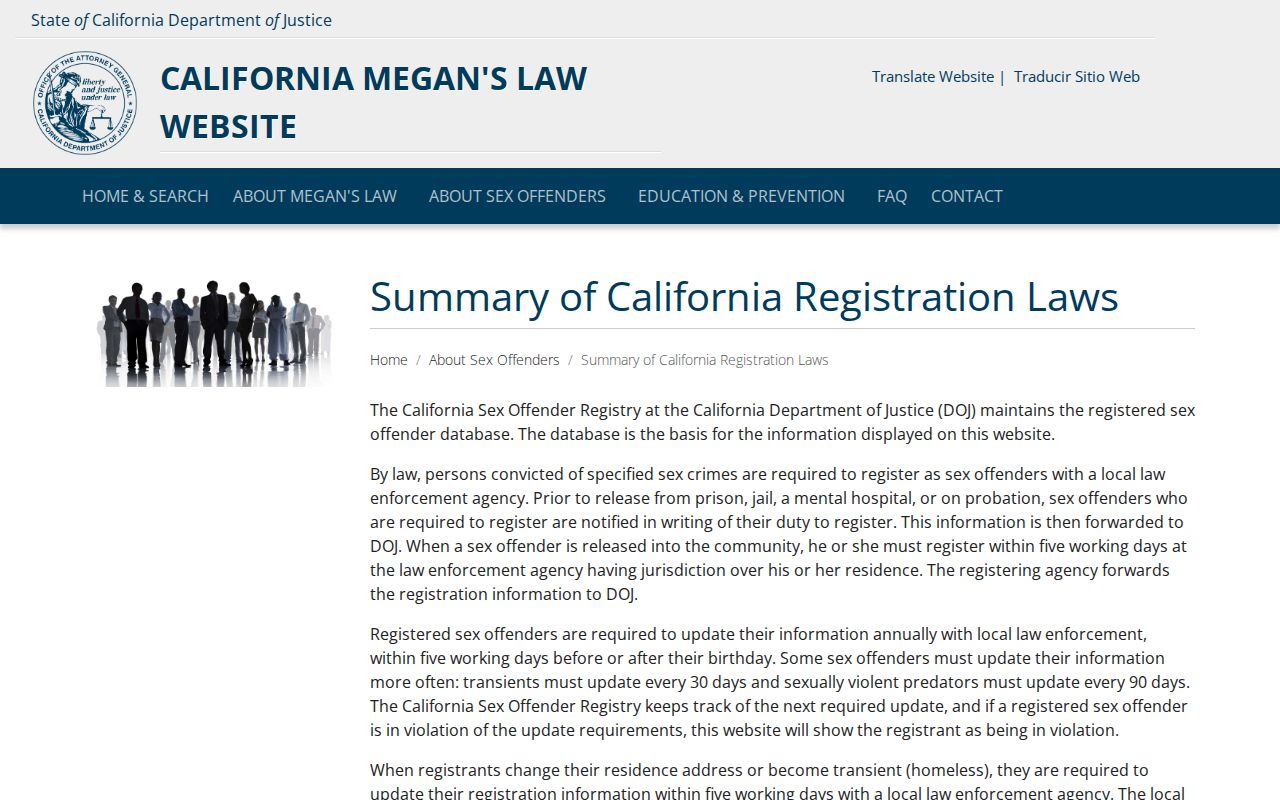
This distinction prevents a common mistake: an empty public search is not proof that no person in the area has a registration duty.
- Home address
- The full residence may be posted when California law places the profile in that category.
- ZIP Code only
- The public profile identifies a broader postal area rather than a street address.
- Conditional address
- Address disclosure depends on the statutory conditions that apply to the profile.
- Non-public category
- The person registers with law enforcement but is not displayed on the public website.
Registry Profiles: What They Show
A public profile identifies the registrant and the offense information California law permits DOJ to disclose. It can support a careful match, but it does not reproduce every arrest, charge, dismissal, or conviction. For the underlying Contra Costa court outcome, use the Contra Costa County court case lookup and verify the actual case file.
| Name and aliases | Public identity fields used to match a result. |
|---|---|
| Photo and description | Photograph plus permitted sex, race, height, weight, hair, eyes, age, scars, marks, or tattoos. |
| Displayed location | Full address, conditional address, or city and ZIP detail allowed for that posting category. |
| Registerable offense | Qualifying offense, statute, description, and conviction detail when displayed. |
| Tier | DOJ states that the tier designation itself is not posted on the website. |
| Status and map context | Registration or compliance detail and location context when the public profile provides them. |
Do not infer facts the profile does not state. The site omits offenses unrelated to the registration basis, and the public entry may not show all case history. It is a community-notification record, not a California DOJ rap sheet.
Why Contra Costa Results Can Be Absent
Several lawful reasons can explain a missing result. The person may use a different spelling or alias. The location filter may be too narrow. A recent local update may still be moving through the agency-to-DOJ chain. Most important, state law excludes some registrants from public disclosure even while their registration duty continues.
Try a broader name or place search and check likely spelling variants. If a search crosses state lines, use the national layer rather than assuming California holds another state's current record. Do not use an absence as a claim about a person's status. Only law enforcement and the responsible registry agency can resolve a suspected compliance issue.
Registration Levels and Duties in California
California's tier-based framework took effect January 1, 2021. DOJ determines the tier for most registrants, while courts determine certain registrations ordered under Penal Code section 290.006. The mandatory minimum periods depend on the tier and whether the adjudication was adult or juvenile. Meeting the minimum does not automatically end registration. An eligible registrant must petition the superior or juvenile court in the county of residence.
| Category | Mandatory minimum period | Public visibility |
|---|---|---|
| Tier One, adult superior court conviction | 10 years | Controlled separately by posting law |
| Tier Two, adult superior court conviction | 20 years | Controlled separately by posting law |
| Tier Three, risk assessment level | 20 years, with added statutory criteria | Controlled separately by posting law |
| Tier Three | Lifetime | Controlled separately by posting law |
| Juvenile Tier One | 5 years | Controlled separately by posting law |
| Juvenile Tier Two | 10 years | Controlled separately by posting law |
Tier duration and website display are different questions. The DOJ FAQ says tier designations are not posted, so a searcher should not guess a tier from the amount of location detail shown.
Petitions Filed in Contra Costa County
A person who has reached the required minimum period and otherwise qualifies may petition in the superior court or juvenile court for the county of residence. For a Contra Costa County resident, that means the local Superior Court is the petition venue. Filing a petition is not the same as automatic removal, and the tier framework contains added statutory criteria.
This process is mainly relevant to understanding why a public profile may later change or disappear. It is not a public mechanism for challenging someone else's registration. Questions about personal eligibility require the current DOJ instructions, the applicable court process, and legal advice suited to the individual case.
NSOPW Beyond Contra Costa County
The Dru Sjodin National Sex Offender Public Website provides a cross-state search layer. It is useful when a location is near a state line, a person may have moved, or the known history is outside California. NSOPW queries participating jurisdiction registries; it does not replace California's source record or expand what state law permits California to show.
The official national search source is shown below.
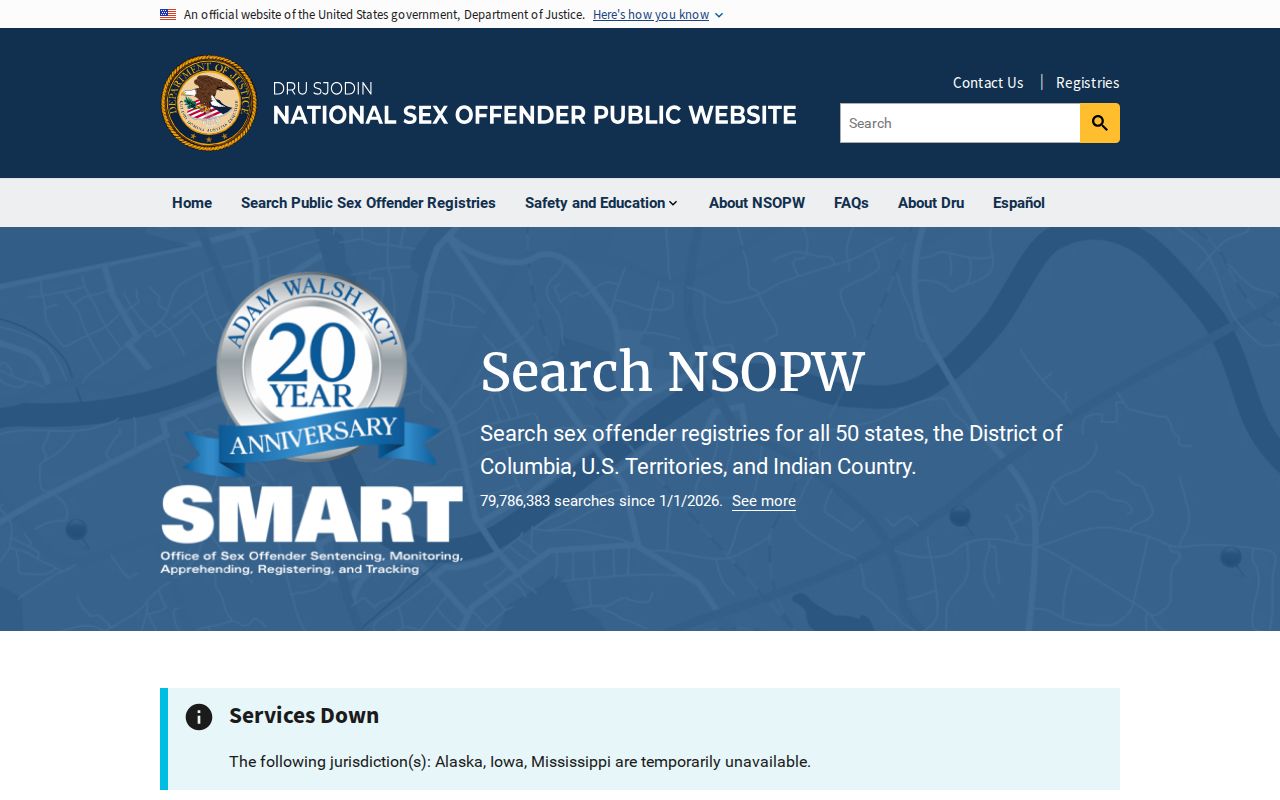
When a national result points back to California, open the linked California profile and apply the same careful identity and lawful-use checks.
Using Registry Information Lawfully
Registry data supports awareness and safety planning. It does not authorize harassment, threats, intimidation, vigilantism, or discrimination. Penal Code section 290.46 sets disclosure and misuse rules. DOJ also warns that registrants who access the site's search function may face punishment under section 290.46(i). Follow the live disclaimer each time because access conditions are part of the official search.
Misuse is unlawful: Do not harass, threaten, intimidate, or take vigilante action based on Megan's Law information; Penal Code section 290.46 restricts use and disclosure.
Report suspected non-compliance to the local police department or Contra Costa County Sheriff's Office with jurisdiction. Call emergency services for an immediate danger. Do not publish private claims, confront a person, or assume that a public profile tells the full criminal history. Verify the displayed source and let law enforcement assess compliance.